What’s more important to your success: your technical skills, your IQ, or your emotional intelligence?
Research suggests that emotional intelligence isn’t just the most important determiner of your professional potential. It’s twice as important as the others. For jobs at all levels.
Emotional Intelligence, or EQ, depends on an interplay skills such as self awareness and self regulation, motivation, empathy and social skills.
EQ is now emerging as the most important aspect of personal development for today’s professionals — everyone’s talking about “soft skills” as the new currency of employability and career success.
After all, these are skills, and like any skill, each of them can be learned and improved on. What we might once have imagined to be “innate talents” or characteristics that defined someone as a “people person” are, in fact, objectively measurable skills that we can learn, practice, and master over time.
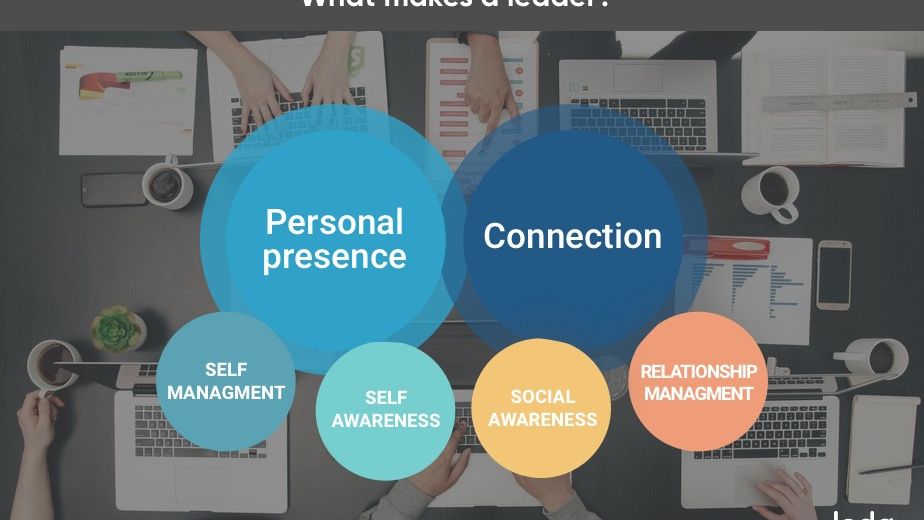
What makes a great leader?
At Leda, we take them a step further. We see leadership as involving three key realms:
1. Personal presence
2. Connection
3. Authority.
We all know authority: that’s seniority. It comes with a job title that includes the word “Manager” or “Leader”. It’s being the one with the ultimate decision-making power.
But authority doesn’t make you a leader. What makes true leaders is their ability to form connections, and their personal presence. And both of these skill areas depend on the five elements of EQ.
Personal presence
Your personal presence is what proves that you walk your own talk. It helps you inspire others, and get them to follow your lead. And it requires that you’re always cool, calm and collected under pressure.
As you can imagine, personal presence requires a high degree of self-awareness, so that you understand yourself, your feelings, and your reactions. But it also entails self-management: your ability to moderate your reactions based on what you’ve observed in yourself. Along with motivation, self-management is essential if you’re to learn from setbacks, so it’s a critical leadership skill.
Connection
How can you lead people if you can’t connect with them? Authority without connection is a bad combination. Good leaders use the power of human connection to inspire and move others to action. It lets us empower others to feel confident — and competent — to contribute to the greater good.
The keys to connection are social awareness and relationship management. Social awareness entails both self-awareness and management, as well as empathy. By understanding ourselves and others, we can moderate our responses to them and the situations we face in ways that amplify individual and team performance overall.
Relationship management again requires empathy, along with social skills that can help us to communicate, motivate, inspire, influence, collaborate and negotiate successfully with others.
Learning leadership
Leadership isn’t a “gift”; it’s a set of behaviours. The more you understand about those behaviours, the more you can practice them. The more you practise, the more your leadership skills — and potential — will grow.
The best advice for a new, aspiring or current leader who wants to expand their career potential? Make your own behaviour change your focus, and practice new leadership behaviours daily.
That’s where Leda comes in. Our skill-focused Journeys are stepped learning programs that include a mix of readings, videos, games, self-assessments and daily activities, all designed to take around 10 minutes a day.
Combine those daily activities with your own personal focus on behavioural change, and your progress might just surprise you.
For more information, book a demo with our team today.